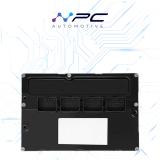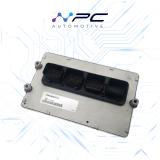
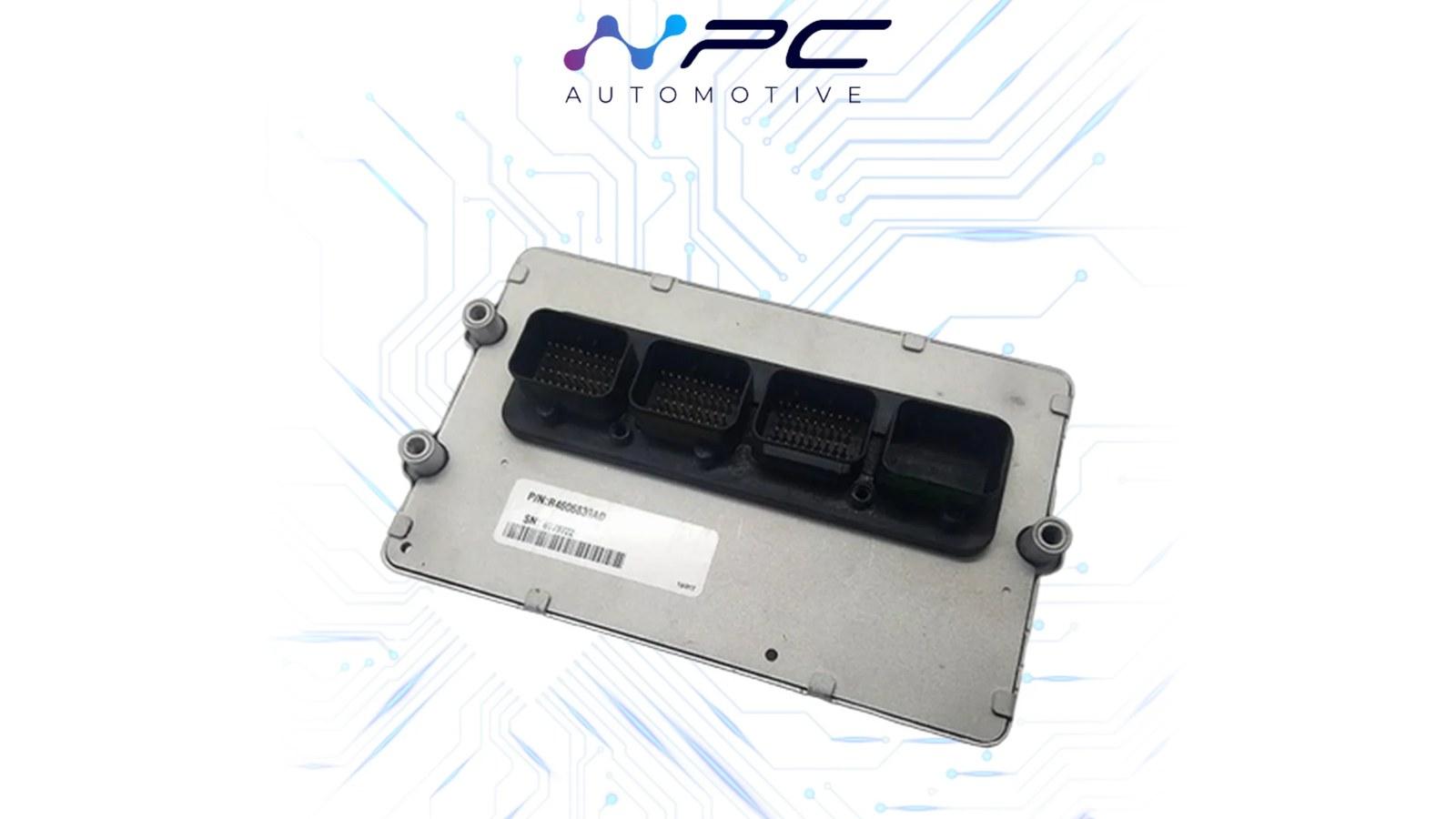
Short answer: on many Dodge, Chrysler and Jeep vehicles, a replacement PCM starts the engine and then shuts it off after a second or two until it has been matched to the Sentry Key Immobilizer (SKIM). Chrysler's own service bulletin warns that skipping the SKIM PIN step after programming a PCM causes a start-and-stall condition. Check that the PCM matches your vehicle (SKIM or non-SKIM), then have a shop, dealer or locksmith with a Chrysler-capable scan tool program the VIN, the mileage and the SKIM key using your vehicle's PIN.
"New PCM, starts then dies" is one of the most common threads on Dodge, Ram and Jeep forums. The engine fires, runs for a second or two, and quits. Do it twenty times and it does the same thing twenty times. It looks like a bad computer, but very often it is the anti-theft system doing its job. This guide explains how to tell, using Chrysler's own service bulletins and cases owners have posted.
Why a new PCM starts and then dies
Sentry Key is Chrysler's anti-theft system. The key has a chip, and the PCM only lets the engine keep running when the immobilizer confirms a valid key. To do that, the PCM has to hold your vehicle's security information.
Chrysler's bulletin 18-042-14, written for replacement PCMs on 2004-2005 models, says it plainly: a new PCM will not operate the engine until it is programmed. The same bulletin warns that failing to install the SKIM PIN after programming the PCM causes a start-and-stall condition. That is the "starts then dies" pattern owners describe.
Real cases from owners
- 2001 Dodge Durango 4.7L: the owner bought a refurbished PCM with his VIN and mileage already flashed in. It started and died immediately, every time. A Dodge dealer told him there are SKIM and non-SKIM versions of that PCM. The second unit the seller sent ran fine.
- 2001 Jeep with a non-chip key: the owner installed a used PCM from a 2002 Jeep. It ran for about 5 seconds, then died. Forum members explained that the PCM came from a Jeep with Sentry Key, so it would not keep running without reading a chip key, and advised a PCM that matched his vehicle.
Two owners, one symptom, and in both the engine itself was fine: the trouble was the PCM that went in.
The codes: P0513, P0633 and U0168
Chrysler uses these names in its service bulletins:
- P0513 - Invalid SKIM Key: the immobilizer did not accept the key.
- P0633 - SKIM Secret Key Not Stored in PCM: the PCM does not have the vehicle's secret key, which fits a PCM that has not been matched to the vehicle yet.
- U0168 - Lost Communication With Vehicle Security Control Module: the PCM is not hearing from the security module.
A scan tool that reads these codes tells you you are looking at a security problem, not a fuel, spark or engine problem.
Step 1: Find out whether your vehicle has Sentry Key
Chrysler's procedure checks this with the scan tool: a module scan lists "SKIM" if the vehicle has it. Owners on forums also use the key as a quick hint: on these models a gray key usually means Sentry Key and a black key usually means none. The scan tool check is the sure answer.
Step 2: Make sure the PCM matches your vehicle
Before you buy or install a PCM, check three things:
- Match SKIM to SKIM. A Dodge dealer told the Durango owner there are SKIM and non-SKIM versions of the same PCM, and the Jeep case shows a Sentry Key PCM won't keep a vehicle without it running.
- Use the part number from the label on your old PCM. Chrysler's bulletin points to that label when the old PCM can't be read.
- Don't flash a random calibration. Chrysler warns that once a calibration is programmed into a generic PCM, it can only be updated to a newer version of that same calibration, not changed to a different one.
Step 3: Program the PCM to the vehicle
This is the part that needs a Chrysler-capable scan tool, so a dealer, a well-equipped shop or an automotive locksmith usually does it. What Chrysler's procedures include:
- Get the vehicle's PIN first. Chrysler lists three sources: the original selling invoice, a dealer (the "Key Codes" lookup in Chrysler's dealer system), or Chrysler's customer assistance.
- Program the VIN and the SKIM key. On 2004-2005 models the scan tool asks for the VIN and walks through the SKIM step with the PIN.
- Program the mileage. The procedure updates the PCM odometer to the vehicle's current mileage.
- Set the extras some models need, such as the tire size (pinion factor) on automatic and turbo manual models.
- Clear codes in the right order. Programming can set codes in other modules (transmission, body, cluster, SKIM). Chrysler says to clear those first and the PCM last.
2009 models: Journey, Caliber, Avenger, Sebring, Compass, Patriot
Chrysler's recall procedure H33 for these 2009 models shows the steps after a PCM replacement. On vehicles with a Wireless Control Module, the scan tool runs "PCM Replaced" under that module and asks for the vehicle's PIN. On vehicles without it, the scan tool runs "Check PCM VIN". Both then run the electronic throttle learn and check the PCM odometer.
Newer models with an RF Hub
Chrysler's 2022 STAR case S2208000073 covers a no-start with P0513 after a PCM flash or replacement. On those vehicles the PCM, the body control module and the RF Hub exchange a security code. The fix is the "PCM/ECM/ESL replace" routine under the body control module, then a "Proxy Configuration Alignment", then the electronic throttle learn.
One install tip from Chrysler
Chrysler's recall instructions say to turn the ignition off and disconnect the negative battery cable before unplugging the PCM connectors, to avoid a voltage spike that could damage the PCM. During programming they call for a battery charger holding 13.0 to 13.5 volts, because a voltage outside that range can make the flash fail.
Should you "delete" Sentry Key?
Searches for "SKIM delete" are common. A delete removes your vehicle's theft protection. Matching the PCM to the vehicle with the PIN is the repair Chrysler documents, and it keeps the anti-theft system working.
When the PCM really is the problem
If the PCM matches your vehicle, has been programmed with the VIN, mileage and SKIM key, and there are no security codes, the start-and-stall is not a Sentry Key problem. Then look at the usual causes: fuel, spark, sensors, power and ground. That's when a bad PCM becomes a real possibility.
Frequently asked questions
Why does my Dodge start then die after a PCM swap?
Most often the PCM has not been matched to the Sentry Key system, or it is the wrong version (SKIM vs non-SKIM). Chrysler's bulletin says a missing SKIM PIN step causes a start-and-stall condition.
Do I need a PIN to replace a Dodge PCM?
On vehicles with Sentry Key, yes. Chrysler's procedures ask for the vehicle's PIN when the PCM is programmed. The PIN is on the original selling invoice, or a dealer can look it up.
What does "invalid SKIM key" mean?
It is code P0513: the immobilizer did not accept the key. After a PCM replacement it usually means the PCM and the security system are not matched yet.
Can I use a PCM from another vehicle?
Only if it matches: same part number, same SKIM or non-SKIM setup, and programmed for your vehicle. The Jeep case above shows what happens with a used PCM from a different setup.
Dodge, Chrysler and Jeep PCMs from NPC Automotive Computers
Every NPC unit is remanufactured and programmed before it ships. Order with your VIN and the part number from the label on your old PCM, so the replacement matches your vehicle. On a vehicle with Sentry Key, plan for the SKIM step after install: a dealer, shop or automotive locksmith with a Chrysler-capable scan tool enters your vehicle's PIN, as described in Step 3. Not sure whether your vehicle has Sentry Key or which PCM fits? Call us before you order and we'll check it with you.