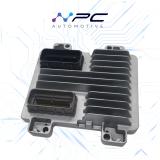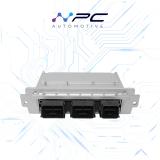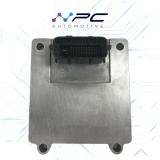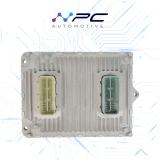
Short answer: when carmakers find out why engine computers die, the same few causes come up again and again: water getting into the module or its connector, too much voltage from the charging system or from battery work done in the wrong order, a failing ignition coil or bad ground sending interference back into the module, and, on some vehicles, a defect from the factory. Just as often, the makers find the computer was never bad: a code that points at the ECM turns out to be a sensor, a wire, a ground or software. Below is what GM, Ford, Chrysler, Toyota, Honda and Volkswagen have written about each cause, and what to check before you buy a replacement.
Owners ask "what causes an ECM to go bad?", "how do I know if my ECM is bad?" and "can a bad battery cause ECM problems?" again and again, in search and on owner forums. Most answers online are lists with no source. Every cause in this guide comes from a maker's own service bulletin or recall, and each one is linked at the end so you can read it yourself.
Signs of a bad ECM, in the makers' own bulletins
The makers' documents describe the same handful of symptoms when an engine computer (ECM, PCM or ECU, depending on the maker) has really failed:
- The engine cranks but won't start, or starts and stalls. Toyota's recall for 2005-2008 Corolla and Corolla Matrix computers and Chrysler's recalls H33 and U87 all list a no-start and a stall, including a stall while driving.
- Check engine light with harsh or odd shifting. Toyota's Corolla recall lists harsh shifting. Honda's bulletin 00-098 for the 2001 Civic lists an automatic that may not shift out of Park, flashing shift indicator lights and an unstable idle, with code P1705.
- A scan tool can't talk to the computer. Honda's ServiceNews A15120F lists the dealer's tester failing to communicate with the ECM/PCM; Volkswagen's tech tip for the Atlas lists code U0100, lost communication with the ECM.
- Misfires that keep coming back. GM's bulletin PIP5038B for 2008-2009 3.6L direct-injection engines ties repeat coil failures and misfires to an ECM that holds a coil on too long.
Every one of these symptoms also appears in bulletins where the computer was fine and something else was wrong. That is why the section on checks before you replace it matters as much as the list of causes.
What kills an ECM: the causes the makers document
1. Water and corrosion
Water is the cause that shows up across the most makers.
- Ford Windstar, Freestar and Mercury Monterey: Ford's bulletin 06-14-10 covers 1999-2003 Windstar and 2004-2007 Freestar and Monterey built before June 22, 2006. Rain running down from the cowl grille, together with a PCM connector cover that does not seat fully, lets water reach the PCM. Ford lists trouble codes, harsh or late shifts, no reverse, a lean misfire and a rough idle. The fix is to seal the leak path and the cover, and service the PCM as needed.
- GM full-size trucks and SUVs: GM's bulletin 08-07-30-021H (2007-2013 Silverado and Sierra 1500, 2007-2014 heavy-duty, Tahoe, Suburban, Yukon, Escalade and related models with the six-speed automatic) lists corrosion and water intrusion in control module connectors among the causes of lost communication, no-crank, stalling and transmission faults. For every cause it lists, GM tells the technician not to replace any control module until the cause has been isolated.
- Owners see the same thing. A technician working on a 2011 Chevy Aveo in reduced power found water in the PCM connector; a new PCM alone did not fix it, and the code stayed away only after the connector was dried and cleaned. A 2018 Ford Raptor owner chasing an intermittent no-crank with a code stored in the PCM traced it to a corroded battery junction box; the owner believes a high-pressure engine bay wash a few weeks earlier forced the water in, and reported no problems three months after replacing the box.
What to check: the module's connectors for green or white corrosion and moisture, the seal or cover over the module, and the path water takes to get there (cowl, drains, a washed engine bay). If you replace the computer and leave the leak, the new one sits in the same water.
2. Too much voltage from the charging system
- Honda Civic 2001-2005: Honda's ServiceNews A15120F says that if the alternator bolts are loose, for example after alternator service or an accessory A/C install, the alternator can overcharge and destroy the ECM/PCM. Symptoms: cranks but won't start, check engine light, a blinking immobilizer light, and the tester can't communicate with the computer. Honda says to tighten the bolts first, then check the computer's power and ground, and only then replace it.
- Honda Civic 2001: Honda's bulletin 00-098 says a power surge may damage parts inside the ECM/PCM, and the fix was a new computer.
What to check: the alternator's mounting and output, the battery cables and the engine grounds, before a new computer goes in.
3. Battery work done in the wrong order
- Volkswagen Atlas 2018-2019: Volkswagen's tech tip 01-19-05TT says the ECM can be shorted internally if the positive battery terminal touches the ECM case while the battery is being disconnected, leaving a crank, no-start and code U0100. Volkswagen's rule: always disconnect the ground (negative) cable before the positive.
- Chrysler: Chrysler's recall H33 instructions warn that a voltage spike could damage the PCM, so the key must be off and the negative battery cable disconnected before the PCM connectors are unplugged.
- GM Cobalt, HHR, G5 and ION: a transmission computer that touches the positive jump-start post is damaged; see our Cobalt and HHR guide for GM's precautions.
What to check: if the trouble started right after a battery change, a jump-start or other electrical work, tell whoever diagnoses it. Key off, negative cable first, and keep tools and cables away from the module's case.
4. Ignition coils and bad grounds
- GM 3.6L direct-injection V6 (2009 Acadia, Enclave, Traverse and Outlook, 2008-2009 CTS and STS): GM's bulletin PIP5038B says electrical interference sent back from a coil can make the ECM hold a coil on, which overheats and damages the coil. GM lists the sources to fix: cracked, worn or fouled spark plugs, loose or corroded battery cables, dirty or loose coil and engine grounds, and a poorly seated underhood fuse block connector. GM warns not to start the engine until those checks are done, or the new ECM could be damaged, and in some cases replaces the coils, plugs and ECM together.
- Ford Edge and Lincoln MKX 2007-2008: Ford's bulletin 12-8-17 replaces the PCM together with all six coils and plugs when the coils show damage; see our Edge and MKX guide.
What to check: if coils keep failing, check the plugs, the coil grounds and the battery cables before you replace the computer, and do not start the engine on a new computer until the cause is fixed.
5. Defects from the factory
- Toyota Corolla and Corolla Matrix 2005-2008, 1ZZ-FE, 2WD: Toyota's safety recall A0J says some engine computers were improperly made, and cracks can form at solder points or on parts of the circuit board. The result can be a warning light, harsh shifting, a no-start or, in limited cases, a stall while driving. Toyota dealers inspect the computer's part and lot numbers and replace it free if it is affected.
- 2009 Dodge Journey, Avenger and Caliber, Chrysler Sebring, Jeep Compass and Patriot: Chrysler's recall H33 says a new adhesive used to build the PCM could put pressure on the circuit board and crack a solder joint at the fuel pump relay, causing a stall or no-start.
- 2017-2019 Chrysler, Dodge, Jeep and Ram models: Chrysler's recall U87 covers about 12,766 vehicles, including the 2018 Ram 1500, with engines built from August 30, 2017 through June 27, 2018. The PCM may have been built with a suspect voltage regulator chip, which can cause a no-start, a start-and-stall or a stall while driving.
What to check: before you pay for a computer, run your VIN through the free recall lookup at nhtsa.gov/recalls or ask a dealer. If an open recall covers the module, the maker replaces it.
Before you replace it: when the code points at the ECM but the ECM is fine
The makers have written bulletins for exactly this, because good computers get replaced:
- P0606 that is really a cam sensor: GM's bulletin 17-NA-132 (2017-2018 Silverado, Sierra, Express, Savana and Cruze with the LH7, LWN or L5P engine) says an open in the camshaft position sensor circuit can set P0606, the ECM performance code, and a no-start. GM's instruction: do not replace the ECM; check the cam sensor.
- P0606 that is software: GM's bulletin 20-NA-144 (2016-2017 ATS, CTS, Cruze and Malibu with stop/start) blames a software problem for P0606, a no-start, reduced power or a stall, and says to reprogram the ECM rather than replace it.
- P0700 stored in the ECM: GM's PIP5109E (2014-2015 Silverado and Sierra, 2015 Tahoe, Suburban, Yukon and Escalade, and others) says P0700 in the ECM is caused by the transmission module and should not need a new ECM.
- Harsh shifting and a pile of codes from wiring: GM's bulletin 23-NA-102 (2022-2024 Silverado and Sierra 1500 and 2023 Tahoe, Suburban, Yukon and Escalade) traces rough shifting, hesitation, P0700 and lost-communication codes to water in the charge air cooler pump connector, a pinched grille shutter harness, a harness rubbing the alternator bracket or a loose engine ground. The repair is the wiring.
- No crank and no communication from a loose ground: GM's PIP5476 (2017 Colorado and Canyon 3.6L) traces a no-crank, a dead battery and lost communication with the ECM and transmission module to a loose ground on the cylinder head.
- Water in the headlamps: GM's PIT5546E (2016-2018 Silverado and Sierra 1500, 2019 Silverado 1500 LD and Sierra 1500 Limited) says water in a headlamp assembly can keep modules awake, drain the battery, cause a no-crank or stop the ECM from programming.
A quick check before you buy a new engine computer
- Write down every code, from every module, not only the engine.
- Test the battery and the charging system, and check that the alternator is mounted tight.
- Clean and tighten the battery cables and the engine and module grounds.
- Unplug the computer's connectors (key off, negative cable off first) and look for water, corrosion and bent or pushed-back pins.
- On an engine with coil-on-plug ignition, check the coils and plugs if misfires keep coming back.
- Look up open recalls for your VIN at nhtsa.gov/recalls.
- Ask whether a software update or reprogramming applies before replacing the module.
If the computer still fails after these checks, fix the cause first and then replace it. To find it on your vehicle, see where the ECM is located.
Frequently asked questions
What is the most common cause of ECM failure?
In the makers' documents we read for this guide, water and corrosion appear most often, from Ford's Windstar cowl leak to GM's truck connector bulletin. Overvoltage, battery work, coil and ground problems and factory defects follow.
Can a bad battery cause ECM problems?
Yes, in several ways the makers describe. Volkswagen says the ECM can be shorted if the positive terminal touches its case during battery removal. GM's bulletin 24-NA-050 for 2024 Silverado and Sierra HD says a low battery or a charging event can set P0606 in the brake module, and the fix is to test the battery, not replace the module. Loose or corroded battery cables are also on GM's list of causes of coil and ECM damage in PIP5038B.
Can a bad ECM cause transmission problems?
It can. Toyota's Corolla recall lists harsh shifting from a failing engine computer, and Honda's 2001 Civic bulletin lists an automatic that won't shift out of Park. But GM's bulletins show that wiring, grounds and the transmission module itself cause the same symptoms, and that P0700 in the ECM points to the transmission module.
Can you drive with a bad ECM?
It is not safe to count on it. Toyota's and Chrysler's recalls say a failing engine computer can stall the engine while driving, which can increase the risk of a crash.
Can a bad ECM be fixed by reprogramming?
Sometimes. GM's bulletin 20-NA-144 fixes P0606 on some 2016-2017 cars with a software update instead of a new ECM. The same bulletin warns that an interruption during programming can cause a failed programming or damage the module, and that unstable battery voltage interrupts programming, so it is done with a stable power supply.
Is the ECM the same as the PCM?
For this guide, yes: GM and Toyota say ECM, Ford and Chrysler say PCM, and Honda writes ECM/PCM for the computer that runs the engine. Some vehicles also have a separate transmission module.
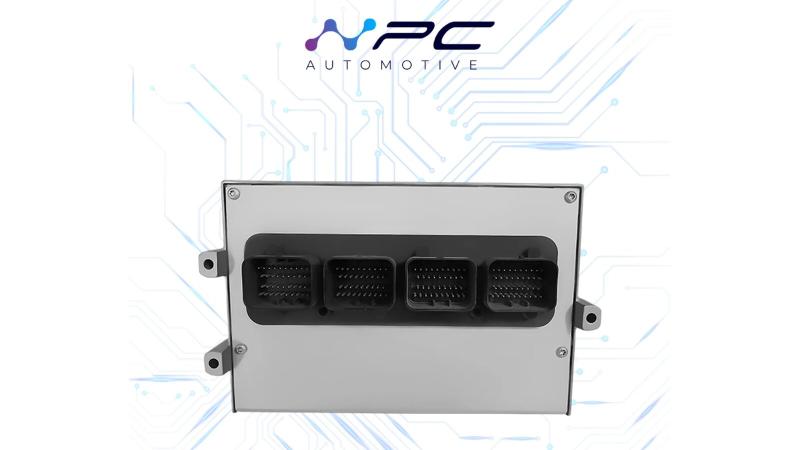
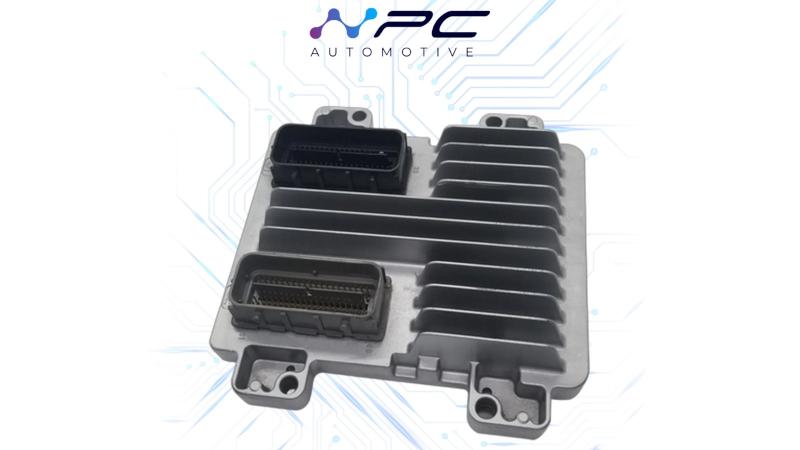
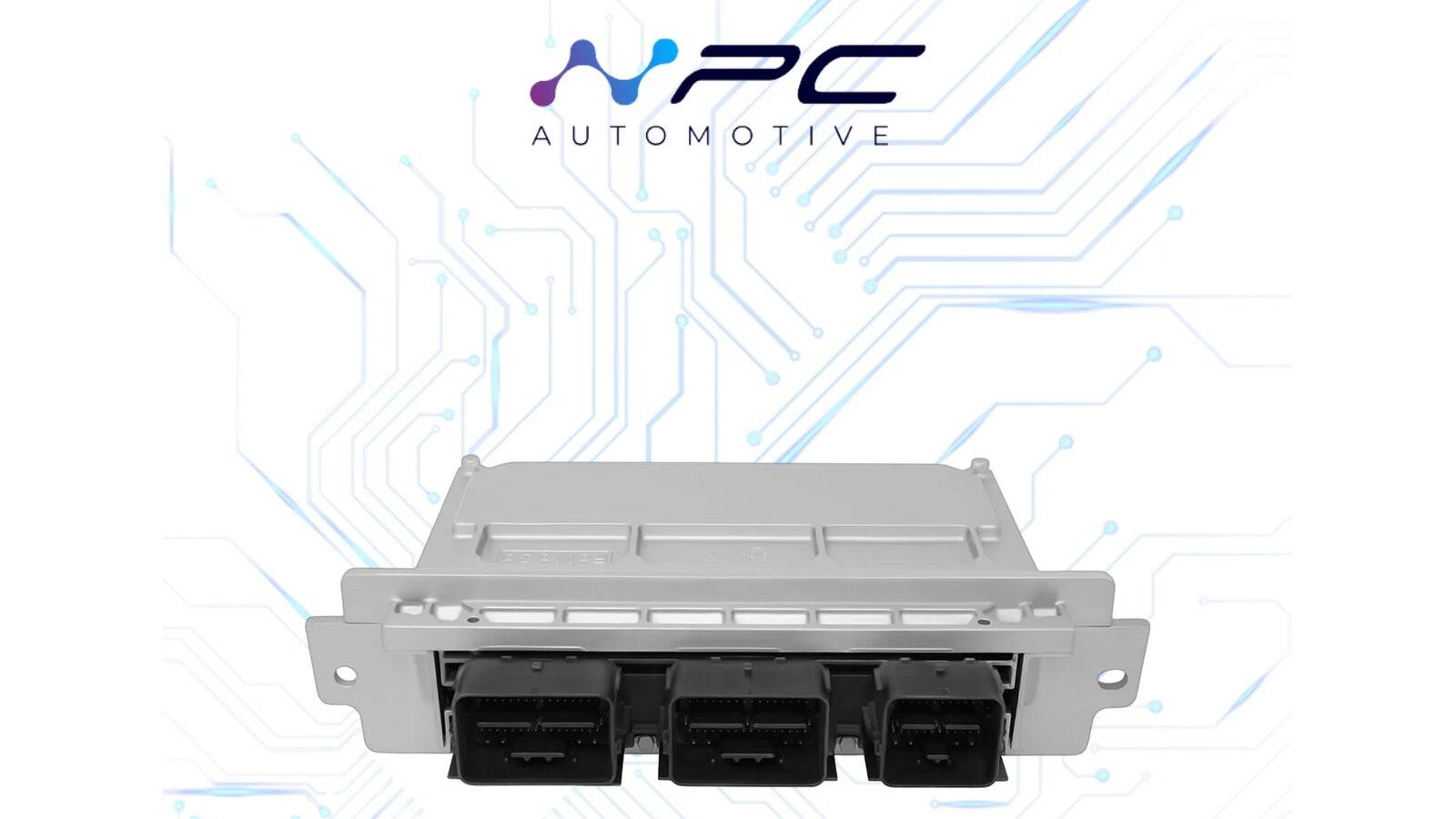
Engine computers from NPC Automotive Computers
Every NPC unit is remanufactured and programmed before it ships, and it comes with a lifetime warranty. Order with your VIN and the part number from the label on your old computer, and fix the cause above first so the new unit lasts. Each listing says whether the unit is Plug & Play, with no dealer or locksmith visit needed after install, or programmed to your VIN, in which case plan for the key or theft-deterrent relearn at a dealer, a shop with the maker's tools, or a locksmith. Would you rather keep your own computer? We also repair and return customers' original engine computers, for all makes. Not sure which unit fits? Call us before you order and we'll check it with you.