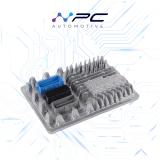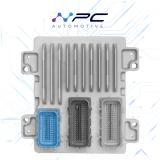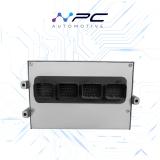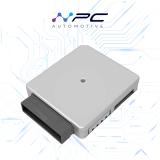
Short answer: there is no single number, even for one model. A U.S. government report says NHTSA counted around 50 electronic control units in a typical vehicle in 2009 and estimated 70 to 100 by 2014. The carmakers' own manuals show why the count moves: GM's 2017 Silverado and Sierra manual lists eight control modules that are not tied to any option, and dozens more that depend on the engine, transmission and options. Below are the main computers, what each one does, what the makers' documents list for real trucks and cars, and what that means when one of them fails.
"How many computers are in a car?" and "how many ECUs does a car have?" are asked every day, and most answers repeat a range like "30 to 100" with no source. This guide uses the makers' service manuals, wiring diagrams and bulletins instead, and names the vehicle each one covers. Every source is linked at the end.
The main computers and what each one does
Every maker names its modules a little differently. Toyota's bulletin T-SB-0120-20 says "ECU" is Toyota's own word for any computer that manages a system, covering the standard names PCM, ECM and TCM and every other control unit. Here are the ones you will meet most, with the names the makers use:
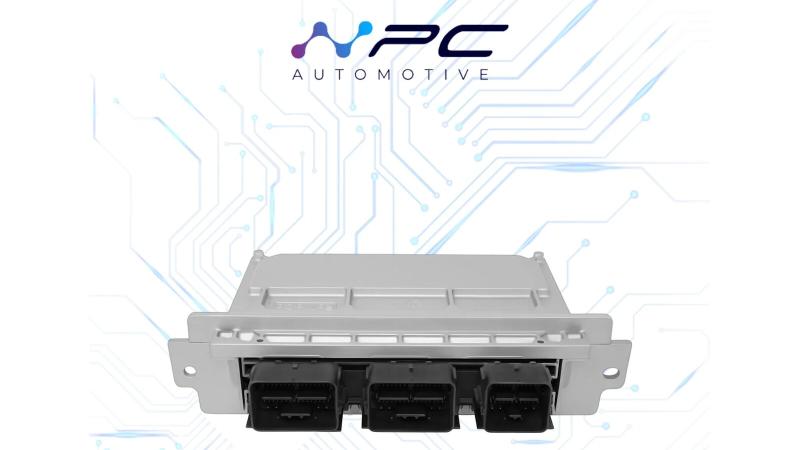
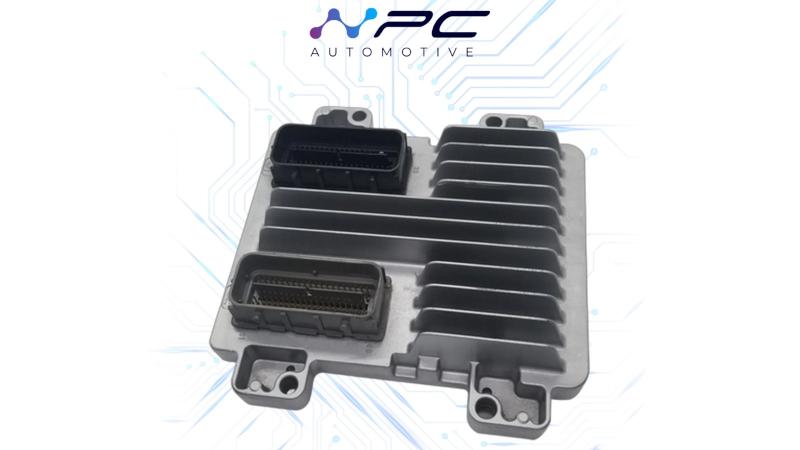
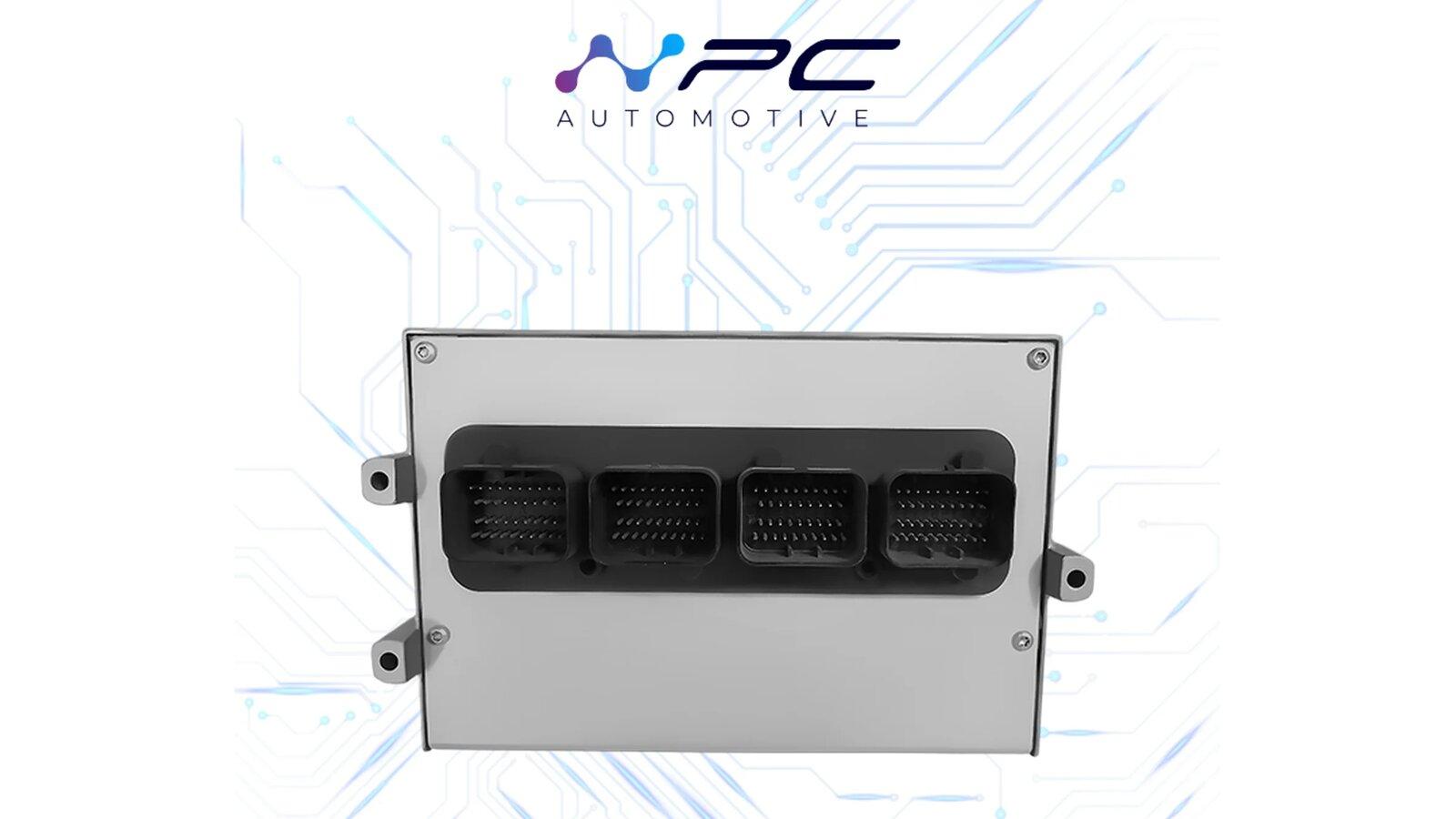
- Engine computer (ECM or PCM): runs the engine. GM calls it the engine control module (K20). Ford calls it the powertrain control module (PCM). Chrysler's 2007 Ram wiring diagram shows an "engine control" module on the diesel trucks and a "powertrain control" module on the gas trucks, so even one maker uses both names. Toyota calls it the ECM or engine ECU, and Honda the PCM.
- Transmission computer (TCM): runs an automatic transmission. On some vehicles it is a separate box; on others the engine computer does the job (see "Does my vehicle have a separate TCM?" below).
- Body control module (BCM): handles body functions. GM's 2017 Silverado manual says the BCM works out the power mode from the ignition switch and sends it to the other modules and works as a gateway that passes messages between the truck's fast and slow data networks. Honda calls its body module the "Power Control Unit". On the 2007 Ram, Chrysler's diagram shows a Totally Integrated Power Module (TIPM) connected to both of the truck's networks.
- Brake computer (ABS module or EBCM): runs the anti-lock brakes and, where fitted, stability control. GM calls it the electronic brake control module (K17), Chrysler the anti-lock brake module, Honda the VSA modulator-control unit, and Toyota's bulletins call it the skid control ECU.
- Airbag computer: GM's inflatable restraint sensing and diagnostic module, Ford's restraints control module (RCM), Chrysler's occupant restraint controller and Honda's SRS unit.
- Immobilizer (anti-theft): GM's 2017 Silverado manual lists an immobilizer control module on every truck. Chrysler's 2007 Ram has a Sentry Key Remote Entry module.
- Others: the instrument cluster, radio, climate control, transfer case, power steering, parking assist, telematics, trailer brake and more, depending on the vehicle.
What the makers' own documents list
2017 Chevrolet Silverado and GMC Sierra
GM's 2017 Silverado/Sierra electrical body builder manual lists every control module with the option code that adds it. Eight have no option code next to them, so they are not tied to an option: the body control module, electronic brake control module, engine control module, HVAC control module, airbag module (inflatable restraint sensing and diagnostic module), chassis control module, power steering control module and immobilizer control module. The transmission control module has a separate entry for each transmission, and on one of them it sits inside the transmission.
The rest depend on how the truck was built: transfer case, suspension, seat memory, heated seats and steering wheel, park assist, power take-off, telematics, trailer brake, assist steps, a glow plug and cooling fan module on the L5P diesel, hybrid modules on the hybrid, and CNG modules on CNG trucks. Other units, such as the radio, are on the data networks too under their own codes. GM also notes that a scan tool tries to talk to every module that could be fitted and shows "No Comm" for options the truck doesn't have.
2015 Chevrolet Silverado and GMC Sierra
GM's 2015 manual lists 25 control modules and receivers, from the engine, transmission, body and brake modules to the transfer case, immobilizer, telematics and trailer brake modules. Again, several are marked for one option only, such as the glow plug module for the LML diesel and the CNG module.
2007 Ram 1500, 2500 and 3500
Chrysler's 2007 Ram (DR) bus communications diagram shows two networks:
- The fast network (CAN-C): the TIPM, the anti-lock brake module, the transmission control module, the engine computer (an ECM on the diesel, a PCM on the gas engines), a steering angle sensor on trucks with stability control, and a final drive control module on the Power Wagon.
- The body network (CAN-B): the TIPM, instrument cluster, Sentry Key Remote Entry module, occupant restraint controller, overhead module, sunroof, DVD system, A/C-heater control, radio, amplifier, hands-free module and satellite receiver.
That is 18 electronic units on one diagram, counting both the diesel ECM and the gas PCM, and many of them are options.
Ford F-150 and Super Duty
Ford's special service message 49994 for the 2021 F-150 names six separate module networks (FD1, HS1, HS2, HS3, HS4 and MS); when its gateway module is not configured correctly, the modules on four of those networks stop answering the dealer's scan tool. Ford's 2025 body builders layout book tells upfitters to disconnect the battery negative cable and every connector to the sensitive modules (PCM, BCM, ABS, RCM, instrument cluster, GPM, NOx, SCR, TCM and others) before welding on the truck, and says almost all Ford-installed electronic modules are VIN-specific, set up for the one vehicle they came in.
2018-2019 Honda Odyssey, 2019 Pilot and Ridgeline
Honda's bulletin 18-086 lists the units on just one of these vehicles' networks (F-CAN): the PCM, multipurpose camera unit, i-VTM control unit, VSA modulator-control unit (brakes), keyless access/TPMS control unit, EPS (power steering) control unit and SRS (airbag) unit, plus the CAN gateway and the gauge control module.
Does my vehicle have a separate TCM?
It depends on the vehicle. GM's 2017 Silverado and Chrysler's 2007 Ram both show a transmission control module of its own. On other vehicles the engine computer runs the transmission and there is no separate box: when the owner of a 1998 Ford Ranger with the 4R44E automatic was told to replace the TCM, a member of the Ranger forum answered that there is no separate module, it is part of the PCM. Toyota's bulletin uses "ECU" for the PCM, ECM and TCM alike. Before you buy a transmission computer, check the label and your vehicle's documents; if the engine computer runs the transmission, that is the part to look at.
How the computers talk to each other
The modules share information over data networks instead of separate wires for everything. GM's 2017 manual describes the high-speed network as two twisted wires running at 500 kbit/s, a slower single-wire network for features the driver operates, and gateway modules that pass messages between them: the BCM between the fast and slow networks, the EBCM for the chassis network and the ECM for the powertrain network. GM adds that a serial data gateway module separates the secure networks from the unsecured ones, for cybersecurity and newer safety features.
This matters when a code shows up. GM's PIT4667D says a lost-communication ("U") code "does not represent a failure of the module" that sets it, and GM's 2017 manual adds that these codes are usually set in modules other than the one that stopped talking. GM's bulletin 08-07-30-021H for 2007-2014 trucks traces U0100 (engine computer), U0101 (TCM), U0121 (ABS) and U0140 (BCM) to wiring, corroded connectors and terminals, and tells technicians not to replace any control module until the cause is found. For more on what kills a module and what only looks like it, see what really kills an ECM.
When one of them is replaced
Because the modules work together, a replacement has to be set up for the vehicle. Ford says almost all of its modules are VIN-specific. Toyota's bulletin T-SB-0120-20 says some 2021-2023 Toyota models need configuration software loaded when an ECU is replaced, such as the body and brake ECUs on the 2022-2023 Tundra. Engine computers also have to match the vehicle's anti-theft system; our guides for Ford, Dodge, Chrysler and Jeep and Chevy and GMC explain what happens after the swap.
Where it started
A 2012 report from the Transportation Research Board says the first production engine control unit was a single-function controller for electronic spark timing on the 1977 Oldsmobile Toronado. The GAO report says that over time control units went from running one function on their own to running several functions together over shared networks.
Frequently asked questions
How many computers are in a car?
There is no single number. The GAO report says NHTSA counted about 50 in a typical vehicle in 2009 and estimated 70 to 100 in 2014. The makers' manuals show the count changes with the engine, transmission and options: GM's 2017 Silverado lists eight modules not tied to any option and many more that are, and Chrysler's 2007 Ram diagram shows 18 electronic units on its two networks.
What is the main computer in a car called?
The engine computer: the ECM (engine control module), PCM (powertrain control module) or ECU, depending on the maker. GM uses ECM, Ford uses PCM, and Chrysler used both on the 2007 Ram.
What is the difference between an ECM and a PCM?
Both are the engine computer. The name depends on the maker and the vehicle; on the 2007 Ram, Chrysler calls it an ECM on the diesel and a PCM on the gas engines. Where the engine computer also runs the transmission, there may be no separate TCM.
What is the difference between an ECM and a BCM?
The ECM runs the engine. The BCM runs body functions; on GM's 2017 Silverado it also sets the power mode for the other modules and passes messages between the truck's networks.
Is the ABS module a computer?
Yes. GM calls it the electronic brake control module, and on the 2017 Silverado it also works as the gateway for the chassis network. GM's bulletin 08-07-30-021H lists U0121 as lost communication with the ABS control module.
Does every module in the scan tool list exist on my vehicle?
No. GM says the scan tool tries to reach every module that could be fitted and shows "No Comm" for options your vehicle does not have, so a "No Comm" alone does not mean a module failed.
Engine computers from NPC Automotive Computers
We sell remanufactured engine computers and transmission computers. Every NPC unit is remanufactured and programmed before it ships, and it comes with a lifetime warranty. Order with your VIN and the part number from the label on your old computer. Each listing says whether the unit is Plug & Play, with no dealer or locksmith visit needed after install, or programmed to your VIN, in which case plan for the key or theft-deterrent relearn at a dealer, a shop with the maker's tools, or a locksmith. Would you rather keep your own computer? We also repair and return customers' original engine and transmission computers, for all makes. Not sure which unit fits? Call us before you order and we'll check it with you.