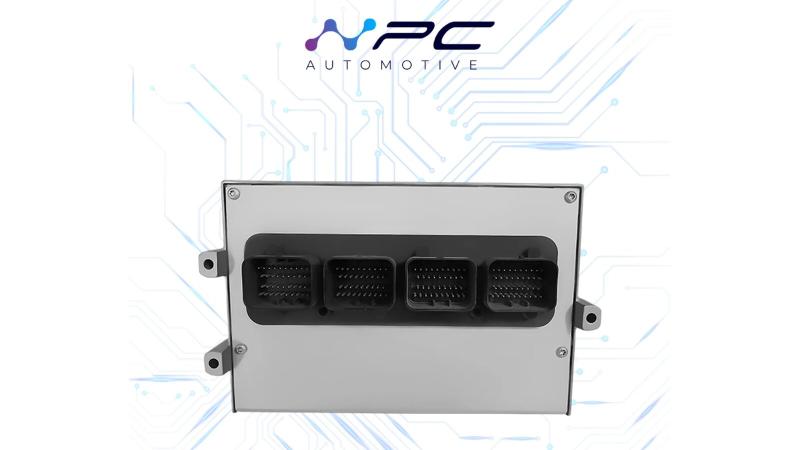

Short answer: before you pay to repair or replace a PCM (powertrain control module, the engine computer), check two things. First, who pays: on 1995 and newer cars and light trucks, the federal emissions warranty covers the engine's emissions computer against defects for 8 years or 80,000 miles, and a recall can reprogram or replace it for free. Second, whether the computer is really the problem: the carmakers' own bulletins often fix a "bad PCM" by stopping a water leak, repairing a corroded connector or updating the software. When the computer itself has failed, the makers replace it, and the new one has to be set up for your vehicle.
Every source below is a carmaker's service bulletin or recall, or a U.S. government document, linked at the end. Each bulletin covers specific vehicles, so use it as a guide to what to check, not as a diagnosis for yours.
Can a PCM be repaired?
In the maker documents we read, a "PCM problem" is fixed in one of three ways: fix what is around the computer (a leak, a connector, a sensor), update its software, or replace it. None of them repairs the inside of the computer. When the fault is inside, the maker replaces the unit: in Chrysler's 2018 safety recall U87, a suspect voltage regulator chip on the PCM's circuit board is fixed with a new PCM, and the dealer must damage and dispose of the old one.
So the useful question is not "repair or replace" but "what is actually wrong, and who pays for it".
Before you pay: warranty and recalls
The federal emissions warranty
The U.S. Environmental Protection Agency (EPA) explains that on 1995 and newer cars and light trucks, three "specified major emission control components" are covered for 8 years or 80,000 miles, whichever comes first: the catalytic converter, the electronic emissions control unit or computer, and the on-board diagnostic computer. The EPA adds that:
- A part that fails from a defect in materials or workmanship must be repaired or replaced by the maker free of charge within that time and mileage.
- The warranty applies whether you bought the vehicle new or used.
- On a valid claim you cannot be charged for the diagnosis, the parts or the labor.
- To have the maker pay, take the vehicle to a repair facility the maker authorizes. A shop that is not authorized does not have to tell you a part is under warranty.
- The maker can deny the claim only if poor maintenance or misuse caused the failure. If you are denied, ask for the reason in writing and follow the appeal steps in your warranty booklet; after a written denial, you can write to the EPA.
The EPA also says coverage can differ by type of vehicle and points owners to the warranty booklet. The California Air Resources Board lists 7 years or 70,000 miles for high-cost emissions parts on California vehicles, and notes that the federal 8-year coverage does not apply to medium-duty vehicles with a gross vehicle weight rating of 8,501 to 14,000 pounds. Check the emissions section of your own booklet before you pay.
Bulletins say when a fix falls under this warranty. Toyota's T-SB-0058-13 for some 2012-2015 Tundra and Sequoia reprograms the ECM (PCM) under the Toyota Federal Emission Warranty of 96 months or 80,000 miles. GM's PIP5790B for the 2013-2019 ATS and 2014-2019 CTS lists emissions warranty coverage for its connector repair.
Recalls
A safety recall is free. Chrysler's recall N32 had dealers reprogram the PCM on some 2013 Dodge Dart 1.4L at no charge, and recall U87 replaced the PCM on some 2017-2019 Jeep, Dodge, Chrysler and Ram models with 2.0L, 2.4L, 3.2L, 3.6L or 5.7L engines. Both owner letters say owners who already paid for the repair can send their receipts for reimbursement. Check your VIN on the National Highway Traffic Safety Administration's recall page; the VIN is on the lower left of the windshield and on your registration card.
Using your own shop
The Federal Trade Commission says a dealer cannot void your warranty or deny coverage simply because someone else did the maintenance or repairs, or because you used an aftermarket or recycled part. The maker can deny coverage only for damage it shows that work or part caused.
Is it really the PCM? What the makers check first
- Water reaching the computer (Ford): Ford's TSB 06-14-10 for some 1999-2003 Windstar and 2004-2007 Freestar and Monterey says water can enter the PCM when its connector cover does not seat and water leaks from the cowl panel, causing codes, harsh or delayed shifts, no reverse and misfires. The repair is to seal the leak and service the PCM as needed.
- Water over the engine (Ford): Ford's TSB 17-0014 for some 2015 Transit vans traces a long list of PCM codes, including P061B, to water entering the engine compartment. The repair is at the cowl panel and the air filter, not the PCM.
- Corroded or soaked connectors (GM): GM's PIP5790B for the ATS and CTS with the 2.0L or 2.5L says corroded terminals, or coolant or oil wicking into the ECM connectors, set many unrelated codes, stalling and no-starts. Every terminal is inspected, damaged terminals are replaced, and the leak is fixed.
- Software (Ford): Ford's TSB 17-0008 fixes a hard start or no-start after block heater use in very cold weather on the 2015-2016 F-150 5.0L by reprogramming the PCM.
- Software, even when the code names the PCM (Honda): Honda's bulletin 21-028 for the 2019-2021 Acura RDX and 2021 TLX 2.0L fixes code P061B, "PCM Internal Malfunction", with a software update.
- Software, with a warning not to replace (Toyota): Toyota's T-SB-0058-13 reprograms the ECM (PCM) for an extended crank with lean or rich codes, and states that the ECM (PCM) should not be replaced as part of the repair.
For the other things that kill or mimic a bad engine computer, see what really kills an ECM, and to read the codes themselves, ECM codes explained.
When the PCM does need to be replaced
GM's PIP5790B says when the computer itself is beyond saving: replace the ECM if the terminals inside the ECM's own socket are corroded, if coolant can be heard inside it, or if engine oil is thought to have entered it. The same bulletin also fixes the leak or the wiring.
A replacement also has to be set up for your vehicle. Chrysler's recall U87 shows what the dealer does after installing a new PCM: program it with the vehicle's original VIN and mileage and, depending on the model, get the vehicle's PIN, run the immobilizer routine and run the throttle and brake pedal learns. Each maker does this differently; see our guides for Ford, Dodge, Chrysler and Jeep and Chevy and GMC.
Software updates carry their own risk. Honda's bulletin warns that a control module damaged by an update that did not finish, from low battery voltage, the key turned off early or a cable unplugged, is not covered by warranty.
A quick check before you pay
- Write down every code from every module, with the letter and all four characters.
- Look up open recalls for your VIN.
- Check your vehicle's age and mileage against the emissions warranty in your booklet, and ask a dealer for that make whether the computer is covered.
- Ask for service bulletins and software updates for your vehicle and the codes.
- Look for water, coolant or oil at the computer and its connectors, and for corroded terminals.
- Only then replace the computer, and plan for the setup your make needs.
Frequently asked questions
Can a PCM be repaired?
The makers' documents we read do not repair the inside of the computer. They fix the cause around it, update its software, or replace it. Check the warranty, recalls and the connectors first.
How much does it cost to fix a PCM?
It can cost nothing: a recall is free, and on a valid emissions warranty claim you cannot be charged for diagnosis, parts or labor. The bulletins above allow between 0.2 and 0.7 hours of dealer labor for a reprogram. A replacement means the cost of the computer plus any setup the vehicle needs.
Can I drive with a bad PCM?
It depends on the fault, but Chrysler's recall U87 warns that a failing PCM can cause a no-start, a stall right after starting or a stall while driving, and that a stall while driving can cause a crash. Have it checked before you rely on the vehicle.
How do I tell if my PCM is bad?
Read the codes from every module, then rule out the causes the makers name: water, corroded or soaked connectors, power and grounds, and software. A code that names the PCM, such as P061B, can still be fixed with a software update, as Honda's bulletin shows. Our guide to ECM codes lists the codes that point at the computer.
How long does a PCM replacement take?
For the recall U87 replacement, Chrysler's owner letter estimates about one hour, and its dealer instructions allow 0.4 to 1.2 hours of labor depending on the model. That includes programming the new PCM and the learn routines.
Engine computers from NPC Automotive Computers
We don't repair computers: we sell remanufactured engine and transmission computers. Every NPC unit is remanufactured and programmed before it ships, and it comes with a lifetime warranty and a 30-day return window. Order with your VIN and the part number from the label on your old computer. Each listing's Additional Information says whether the unit is Plug & Play, with no dealer or locksmith visit needed after install, or programmed to your VIN, in which case plan for the key or theft-deterrent relearn at a dealer, a shop with the maker's tools, or a locksmith. Not sure which unit fits? Call us before you order: we'll check it with you and give you a quote first.